Aroha Script: A Handwritten Font That Balances Charm and Clarity
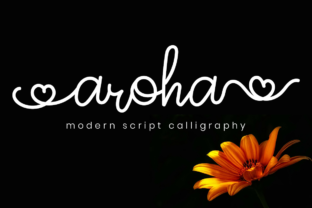
Aroha Script is a carefully crafted handwritten font designed to evoke warmth, personality, and approachability—without sacrificing legibility or versatility. Unlike many script fonts that lean heavily into ornate flourishes or exaggerated connections, Aroha Script uses subtle, consistent stroke variation, gentle rhythm, and intentional spacing to create a natural hand-drawn feel. Its lowercase letters flow with soft entry and exit strokes, while capitals retain friendly proportions—not too tall, not too tight—making it adaptable across sizes and contexts.
What Sets Aroha Script Apart from Other Handwritten Fonts
Many handwritten fonts fall into one of two categories: highly decorative (ideal for logos or short headlines but impractical for body text) or overly simplified (losing the organic nuance that makes handwriting feel human). Aroha Script occupies a thoughtful middle ground. It avoids extreme contrast between thick and thin strokes, which helps maintain readability at smaller sizes—say, in email headers, product labels, or UI elements. Its letterforms are open and airy, with generous counters and modest kerning adjustments built in, reducing the need for manual spacing tweaks in most design tools.
This balance makes Aroha Script especially effective when authenticity matters—but so does function. For example, a small-batch candle brand might use Aroha Script for its “hand-poured with care” tagline on packaging, where the font’s warmth reinforces the artisanal story. At the same time, that same brand could safely use it for a short ingredient list on a sticker without triggering squinting or misreading.
Where Aroha Script Fits in Real-World Design Workflows
Designers often reach for handwritten fonts in three main scenarios: branding (logos, wordmarks), marketing assets (social graphics, invitations), and interface elements (buttons, microcopy). Aroha Script excels in the first two—and works acceptably in the third, provided usage is intentional.
- Branding: Its consistency across weights (where available) and stylistic sets allows for cohesive visual systems. Unlike some scripts that rely on ligatures for basic legibility, Aroha Script remains readable even without them—so it scales well from business cards to website headers.
- Marketing & Print: In wedding stationery, boutique retail signage, or food packaging, Aroha Script adds tactile appeal without looking dated or overly cutesy. Its restrained energy avoids the “overly playful” trap that can undermine credibility in professional or mature contexts.
- Digital Interfaces: While not intended as a system font, it holds up reasonably well in larger UI components—think hero section headlines, testimonial quotes, or call-to-action buttons. Just avoid using it for navigation menus, form fields, or dense paragraph text.
Practical Tradeoffs to Consider
No handwritten font is universally suitable—and Aroha Script is no exception. Its primary limitation lies in extended reading. Even with its clean structure, prolonged exposure to flowing script text fatigues readers faster than sans-serif or even serif typefaces. That means it’s rarely appropriate for blog posts, documentation, or multi-paragraph landing page copy.
Another consideration is language support. Aroha Script typically covers Latin-based character sets thoroughly—including accented characters used in French, Spanish, and German—but may lack extended Cyrillic, Greek, or Asian language glyphs. If your project targets multilingual audiences beyond Western Europe, verify coverage before committing.
Also worth noting: Aroha Script’s charm relies partly on context. Pair it with overly rigid geometric sans-serifs (like Montserrat Bold or Inter Black), and the contrast can feel jarring rather than complementary. It responds best to neutral, slightly warm typefaces—think Lato, Nunito, or even a relaxed serif like Merriweather—for supporting text.
How Aroha Script Compares to Broader Handwritten Categories
Understanding where Aroha Script sits within broader typographic families helps clarify its fit. Handwritten fonts generally fall into three functional groups:
- Display Scripts: Highly stylized, often with dramatic swashes and tight connections—best for single-word logos or decorative accents. Aroha Script is less assertive here; it prioritizes clarity over drama.
- Brush Scripts: Simulate paint or marker strokes, with visible texture and irregular edges. Aroha Script avoids simulated texture—it’s smoother, more controlled, and therefore more versatile across digital and print mediums.
- Casual Scripts: Designed for friendliness and informality, often with rounded terminals and moderate contrast. This is Aroha Script’s closest kin—but where many casual scripts sacrifice uniformity for spontaneity, Aroha Script retains structural discipline without feeling sterile.
In practice, this means Aroha Script often bridges gaps. A designer choosing between a brush script for “fun” and a formal script for “elegance” might find Aroha Script delivers both—tempered, grounded, and quietly confident.
When Aroha Script Is Likely the Right Choice
Aroha Script tends to be the strongest match when your goal is to communicate sincerity, care, or craftsmanship—without veering into whimsy or nostalgia. It fits well for:
- Small creative businesses emphasizing handmade or personalized service (e.g., custom illustration studios, independent bakeries, wellness practitioners).
- Products or services targeting emotionally engaged decision-making—think baby registries, gift subscriptions, or eco-conscious brands where tone supports trust.
- Designers who value typographic reliability: those who want a script font that doesn’t require constant manual kerning, glyph substitution, or fallback planning.
It also suits teams or individuals working across multiple platforms—brand guidelines, social templates, email campaigns—because its behavior is predictable. You’re less likely to encounter rendering inconsistencies across browsers or apps than with more experimental script fonts.
When Another Option Might Serve Better
Aroha Script isn’t the answer if you need maximum impact at ultra-small sizes (e.g., 8pt packaging text), require extensive multilingual support out of the box, or are building a brand identity centered around bold contrast or avant-garde expression. In those cases, alternatives merit exploration:
- For tighter control and sharper contrast: a refined connected script with optical sizing—though expect steeper learning curves in layout refinement.
- For broad language coverage: a professionally engineered variable script font with robust OpenType features and international glyph sets.
- For high-energy, youthful markets: a bolder, more textured brush-style option may better convey movement or immediacy—even if it sacrifices some versatility.
The key isn’t finding the “best” handwritten font overall—but the one whose strengths align with your specific constraints: audience expectations, technical environment, content volume, and long-term maintenance needs.
Making an Informed Decision
If you’re evaluating Aroha Script alongside other options, start by testing it in your actual workflow—not just in a font menu preview. Import it into your design tool and simulate real usage: set a headline, a subhead, and a short descriptive line. View it on both desktop and mobile. Print a sample at actual size. Ask yourself: Does it support the message—or does it compete with it?
Also consider licensing scope. Some handwritten fonts come with restrictive web or app embedding terms. Confirm whether your intended use—especially if it includes dynamic content generation or SaaS integration—is covered under standard licensing.
Finally, remember that typography is one layer of communication—not the sole determinant of success. Aroha Script won’t compensate for unclear messaging or inconsistent visuals. But when chosen deliberately, applied thoughtfully, and paired with strong supporting design choices, it becomes a quiet but effective contributor to how your work is perceived: sincere, considered, and human-centered.