Cloudia Font
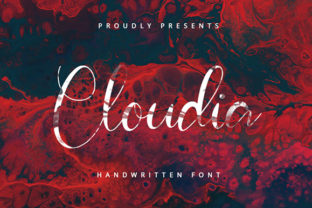
Cloudia is a handwritten typeface designed to evoke warmth, approachability, and lighthearted charm. It features soft, rounded letterforms with subtle inconsistencies—such as varying stroke widths and gentle irregularities in baseline alignment—that mimic natural pen-on-paper movement. Unlike rigid, geometric scripts or highly formal calligraphic fonts, Cloudia prioritizes personality over precision. Its design balances legibility with expressive flair, making it suitable for contexts where friendliness and authenticity matter more than strict typographic neutrality.
Why Consider Cloudia?
Designers and content creators often seek typefaces that reinforce tone without requiring additional visual cues. Cloudia appeals most when the goal is to soften messaging—whether in branding, social media graphics, packaging, or digital illustrations. Its playful vibe aligns well with audiences that respond positively to sincerity and whimsy: think children’s products, wellness brands, indie bakeries, craft studios, or educational materials aimed at younger learners. It’s not merely about aesthetics; it’s about whether the font supports the emotional resonance of the message.
Practical Benefits
Cloudia offers several functional advantages. First, its high x-height and open counters improve readability at moderate sizes—particularly in digital environments like Instagram stories or email headers. Second, its consistent rhythm across characters helps maintain visual flow in short phrases or logos, avoiding the jarring jumps sometimes seen in more erratic handwritten fonts. Third, many Cloudia variants include ligatures and alternate glyphs (e.g., swash capitals or contextual endings), enabling subtle customization without switching fonts.
It also performs well in color-rich layouts. Because its strokes avoid extreme thinning or sharp angles, Cloudia scales reliably across print and screen, reducing rendering issues on low-resolution displays. For teams using design systems, its predictability within limited typographic hierarchies—often paired with a clean sans-serif for body text—can simplify styling decisions without sacrificing character.
Tradeoffs and Limitations
Cloudia is intentionally informal, which limits its applicability in certain settings. It lacks the authority and gravitas needed for legal disclaimers, financial reports, academic publications, or enterprise software interfaces. Its decorative nature also reduces legibility in long-form reading: paragraphs set entirely in Cloudia can fatigue readers due to inconsistent spacing and reduced contrast between similar shapes (e.g., “a” and “o”, or “c” and “e”).
Another consideration is language support. While many Cloudia families cover basic Latin characters and common diacritics, extended Cyrillic, Greek, or non-Latin scripts may be incomplete or absent. Users working with multilingual content—especially in global campaigns—should verify glyph coverage before committing. Additionally, variable font axes (like weight or width modulation) are typically unavailable in Cloudia releases, meaning designers must rely on discrete weights rather than fluid interpolation.
Situations Where Cloudia Fits Well
- Brand identity for lifestyle or creative businesses: A local florist, handmade soap label, or yoga studio may use Cloudia in logos or signage to signal care, individuality, and human-centered values.
- Digital marketing assets: Social media banners, event invitations, or limited-edition product announcements benefit from Cloudia’s ability to stand out in crowded feeds while feeling personal and unpolished.
- Illustrated editorial content: When paired with hand-drawn icons or watercolor textures, Cloudia reinforces a cohesive, tactile aesthetic—ideal for newsletters, zines, or blog headers targeting niche, design-conscious readers.
- UI microcopy with intention: Small interface elements—like empty-state messages (“Nothing here yet! ✨”), confirmation banners, or playful tooltips—can use Cloudia sparingly to add momentary delight without compromising usability.
When to Explore Alternatives
Cloudia may not serve well if your project demands scalability across diverse formats or strict accessibility compliance. For example, government websites, SaaS dashboards, or educational platforms serving users with dyslexia often prioritize fonts with strong character distinction, generous letter spacing, and tested readability metrics—traits more commonly found in fonts like Comic Neue, Reading Edge, or even carefully chosen sans-serifs such as Inter or Atkinson Hyperlegible.
Likewise, if your brand voice leans toward sophistication, minimalism, or technical credibility—say, a fintech startup, architectural firm, or medical device manufacturer—Cloudia’s sweetness could unintentionally undermine perceived expertise. In those cases, a restrained script (e.g., Proza Libre’s light script variant) or a humanist sans-serif with subtle warmth (e.g., Work Sans) may better balance approachability and professionalism.
Making an Informed Choice
Evaluating Cloudia isn’t just about liking how it looks—it’s about asking whether its qualities match your functional requirements. Start by testing it in context: set real copy (not placeholder text) at intended sizes and backgrounds. Check contrast ratios against WCAG guidelines, especially for foreground/background combinations. Preview how it behaves alongside your primary body font: does the pairing feel intentional, or does Cloudia dominate or clash?
Also consider licensing. Some Cloudia versions are available under SIL Open Font License, while others require commercial licenses—particularly for embedding in apps or reselling as part of templates. Review usage rights carefully, especially if your work involves client deliverables or distributed digital products.
Finally, reflect on longevity. Handwritten fonts can date quickly if tied too closely to current design trends. Cloudia avoids overt trendiness through its balanced proportions and moderate decoration, but it still carries stylistic associations. Ask whether its tone will remain appropriate two or three years from now—or whether a more neutral alternative would offer greater flexibility over time.
Conclusion
Cloudia is a purpose-built tool—not a universal solution. Its value lies in specificity: it excels where warmth, informality, and gentle expressiveness are strategic assets. It works best when used deliberately, in controlled doses, and always in service of a larger communication goal. Like any typeface, its success depends less on inherent qualities and more on how thoughtfully it’s applied. Before choosing Cloudia, clarify your audience, medium, message intent, and constraints. That clarity—not aesthetic preference alone—will guide whether Cloudia truly fits, or whether another option serves your needs more effectively.