Manzein: A Refined Display Font Built for Visual Impact
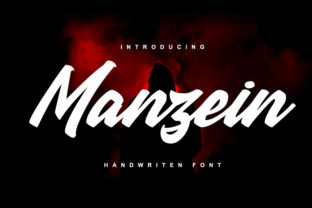
Manzein is a contemporary display typeface designed with deliberate attention to rhythm, proportion, and tactile softness. It’s not a workhorse sans-serif meant for body text or interface labels—nor is it an ornamental script intended solely for logos or invitations. Instead, Manzein occupies a thoughtful middle ground: a highly legible, expressive, and consistently smooth font optimized for headings, branding elements, editorial features, and visual statements where tone and polish matter.
What Sets Manzein Apart Visually
The defining trait of Manzein is its exceptionally smooth curves. Unlike fonts that rely on abrupt transitions between strokes or geometric rigidity, Manzein uses carefully modulated contrast and organic curvature—even in its boldest weights. The terminals taper gently; the junctions between stems and bowls flow without visible joins; even the lowercase a, c, and s avoid sharp inflections. This isn’t just aesthetic preference—it translates directly into visual cohesion. When set large (36pt and up), Manzein delivers presence without aggression. At smaller sizes (24–32pt), it retains clarity and warmth, making it viable for subheads, pull quotes, or short banners where personality must coexist with readability.
Its letterforms balance openness and structure: x-height is generous but not overwhelming, counters are well-proportioned, and spacing is tuned for even color across lines—not just individual glyphs. That consistency becomes especially valuable when pairing Manzein with neutral text fonts like Inter, Lato, or Source Serif Pro. There’s no visual “fight” between headline and paragraph—just a natural hierarchy grounded in contrast of form, not contrast of attitude.
Practical Performance Across Real Projects
In practice, Manzein performs best where intentionality meets visibility. Consider a boutique skincare brand launching a new line: using Manzein for product names or campaign slogans adds quiet confidence—not flashiness, but refinement. Its smoothness echoes the sensory experience of the product itself, reinforcing messaging without illustration. Similarly, educators designing workshop handouts or course landing pages find Manzein effective for section headers. It signals importance without shouting, helping learners parse structure intuitively.
For digital use, Manzein renders cleanly across modern browsers and operating systems. It includes full Latin-1 support, standard ligatures, and OpenType features like stylistic alternates and case-sensitive forms—useful for fine-tuning typographic voice. While it doesn’t include extensive language coverage (e.g., Cyrillic or extended diacritics), its core character set covers English, French, Spanish, German, Italian, Portuguese, and Dutch with full typographic fidelity. That makes it suitable for most Western European publishing, marketing, and web contexts—provided multilingual expansion isn’t a near-term requirement.
Who Benefits Most—and When to Pause
Manzein serves professionals who prioritize tonal alignment over novelty. Freelance designers building brand identities for lifestyle, wellness, education, or creative services often choose Manzein early in mood-board development—not because it’s trendy, but because it reliably conveys calm authority. Marketers crafting email subject lines or social media banners appreciate how its smooth weight distribution holds up at thumbnail scale. Bloggers and independent publishers use it to distinguish article titles from generic platform defaults, lending editorial weight without custom illustration.
That said, Manzein isn’t universally appropriate. Its strength lies in restraint, not versatility. It lacks true monospaced or condensed variants, so it won’t solve tight layout constraints like narrow mobile navigation bars or dense data tables. It also doesn’t offer variable-axis interpolation—meaning you can’t dynamically adjust weight or width via CSS. If your workflow depends heavily on real-time typographic tuning or requires ultra-narrow headlines for responsive modules, you’ll need to supplement with another family.
Another practical note: Manzein works best with ample whitespace. Crowding it into tight margins or stacking multiple weights too closely erodes its defining softness. In print, it shines on coated stock where ink spread is minimal; on uncoated paper, lighter weights may appear slightly less distinct due to subtle absorption—something worth testing in final proofs.
Integration and Workflow Fit
Installing and deploying Manzein is straightforward. It’s available in standard OTF and WOFF2 formats, compatible with Adobe Creative Cloud apps, Figma, Sketch, and modern web stacks. For web use, self-hosting is recommended over third-party CDNs if typography performance and control are priorities—especially given its relatively modest file size (~120 KB for the full family). Loading only the weights you need (e.g., Regular and Bold) keeps render times low without sacrificing expressiveness.
Pairing is intuitive. With serif text faces, Manzein’s soft curves complement traditional contrast without competing. Against humanist sans-serifs, it introduces subtle warmth while preserving neutrality. Avoid pairing it with other high-contrast or aggressively rounded display fonts—the visual distinction blurs, and Manzein’s unique value recedes. A single-purpose pairing (e.g., Manzein Bold for headlines + Inter Regular for body) often yields stronger results than multi-font layering.
Long-Term Value and Design Longevity
Manzein avoids the pitfalls of overly stylized display fonts that date quickly. Its curves are smooth but not saccharine; its proportions are contemporary but not tied to a fleeting trend. That gives it staying power in brand systems where consistency matters across years—not just campaigns. Small business owners updating their website every 18–24 months report less need to “refresh” Manzein-based headers compared to more eccentric alternatives. Educators reusing presentation templates semester after semester find it remains legible and professional without requiring redesign.
From a licensing perspective, Manzein offers clear, tiered options—including perpetual desktop and web licenses with defined pageview limits. There’s no subscription model, which simplifies budgeting for freelancers and small teams. Updates are delivered directly, with version notes focused on technical stability and minor glyph refinements—not feature bloat.
A Final Observation
Manzein succeeds not by trying to do everything, but by doing one thing exceptionally well: delivering visual calm with unmistakable presence. Its smooth curves aren’t decorative flourishes—they’re functional choices that improve legibility at scale, reinforce brand tone, and reduce cognitive load for viewers. It won’t replace your system font, nor should it. But when you need a headline that feels intentional, polished, and quietly confident—Manzein earns its place as a reliable, repeatable asset. Use it where first impressions count, where subtlety communicates more than boldness, and where the shape of the letters supports, rather than overshadows, the message they carry.