Blisk Rhythm: Bold Handwritten Energy
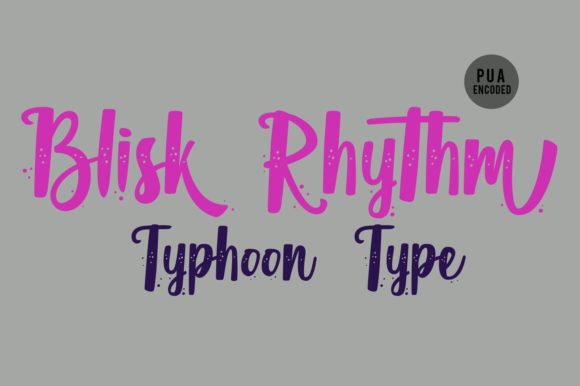
Blisk Rhythm isn’t just another handwritten font—it’s a confident, rhythmic pulse on the page. With its strong downstrokes, subtle bounce in the ascenders, and intentional imperfections (like slight tapering and organic spacing), it feels human-made but never careless. It’s not overly decorative or cutesy; instead, it balances raw energy with clean control—think chalk lettering on brushed steel, not calligraphy on lace. That duality makes Blisk Rhythm stand out in a sea of generic script fonts: it’s bold enough for impact, yet legible enough to earn trust.
Where Blisk Rhythm Earns Its Place
This is a display font first and foremost—not meant for body text, but built to command attention where it counts. You’ll see it shine strongest in logo design for creative studios, indie fashion labels, craft breweries, and wellness brands that want warmth without softness. In editorial design, it works powerfully for magazine cover lines, section headers, or pull quotes where tone matters as much as content. On social media graphics, Blisk Rhythm adds instant character to Instagram carousels, Pinterest pins, or YouTube thumbnails—especially when paired with a restrained sans serif for contrast.
It also holds up surprisingly well in packaging design: imagine it stamped across a ceramic mug, silkscreened on a tote bag, or foil-debossed on a small-batch candle box. The rhythm in its name isn’t just poetic—it translates visually into movement and flow, which helps guide the eye naturally across layouts. And because it avoids extreme flourishes or tight connections, it scales cleanly from mobile screens to large-format prints without losing clarity.
What It Does for Your Brand—Beyond Aesthetics
Typography shapes perception faster than most people realize. Blisk Rhythm signals approachability *and* authority at once—ideal if your brand bridges expertise with authenticity (a yoga instructor who also runs workshops on business sustainability, a tech newsletter that explains AI in grounded, human terms). That balance affects how audiences read your message, not just how they see it.
Used thoughtfully, Blisk Rhythm strengthens visual hierarchy: its weight and personality make headlines pop, while leaving room for supporting typefaces to breathe and clarify. It supports consistency across touchpoints—whether you’re designing a Shopify banner, a printed zine, or a pitch deck—because its voice stays coherent across mediums. And unlike some script fonts that risk looking dated or gimmicky, Blisk Rhythm’s modern typography sensibility keeps it feeling current without chasing trends.
That said, it won’t work everywhere. Avoid using it for legal disclaimers, dense product specs, or multi-paragraph web copy. Its strength lies in brevity and intention—not endurance.
Pairing, Testing, and Practical Fit
Blisk Rhythm thrives in contrast. Try pairing it with a neutral, highly legible sans serif like Inter, Poppins, or Manrope for body text or captions. The clean geometry of those typefaces lets Blisk Rhythm’s expressive strokes sing without competing. For print projects with a tactile feel—think letterpress invitations or artisanal food labels—pair it with a warm, low-contrast serif like Lora or Merriweather to echo craftsmanship without overwhelming.
Before committing, test it in context. Drop Blisk Rhythm into your actual layout—not just a mockup—and check readability at real sizes: 36pt on a desktop hero banner, 24pt on a mobile CTA button, 48pt on a trade show backdrop. Pay attention to how letters like “a”, “e”, and “g” hold up—they’re often the first to blur or tighten at smaller sizes. Also verify spacing between words and lines; some handwritten fonts collapse awkwardly without manual kerning adjustments.
Review what styles are included. Most premium font licenses for Blisk Rhythm include at least Regular and Bold weights—but confirm whether italics, alternates, or stylistic sets (like swash capitals or contextual ligatures) are part of the package. Those extras add flexibility for branding systems that need variation without switching typefaces entirely.
Licensing, Legibility, and Real-World Use
Blisk Rhythm is a commercial font, meaning you’ll need an appropriate license for any project tied to revenue—even if it’s your own Etsy shop or Substack newsletter with paid subscriptions. Most vendors offer clear tiered licensing (desktop, web, app, ePub), so match the scope to your use case. If you’re designing for a client, ensure the license covers their intended usage, not just yours as the creator.
Legibility depends heavily on execution. Its handwritten nature means it reads best with generous letter-spacing (tracking) and line-height—especially on screen. Avoid all-caps usage unless you’re working with a version explicitly designed for uppercase emphasis; lowercase settings tend to preserve its natural rhythm better. And always test color contrast: dark charcoal on off-white works more reliably than black on pure white for extended viewing.
Real designers tell us Blisk Rhythm shines when used sparingly and with purpose—like a single headline on a homepage, the wordmark in a logo lockup, or the title treatment on a workshop flyer. One small business owner reported that switching from a generic script to Blisk Rhythm increased engagement on her Instagram story covers by 22% over six weeks—not because the font “went viral,” but because it made her messaging feel more intentional and less interchangeable.
If you’re evaluating fonts for your next project, ask yourself: does this support the feeling I want people to walk away with? Not “cool” or “trendy”—but *trusted*, *inviting*, *distinct*. Blisk Rhythm doesn’t try to be everything. It’s bold. It’s rhythmic. And in the right context, it’s unforgettable.