Azmerotta: A Strategic Choice for Thoughtful Typography
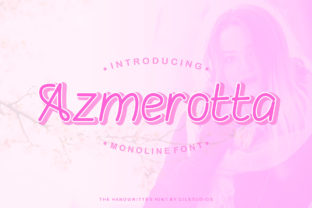
Azmerotta is a modern monoline font—clean, consistent in stroke weight, and deliberately refined. Each letterform has been crafted with attention to rhythm, proportion, and subtle warmth. It’s not merely decorative; Azmerotta carries tonal weight. Its quiet elegance and gentle curves introduce a romantic twist—not in the clichéd sense of hearts and roses, but in the deeper, more resonant meaning of romance: reverence for craft, intentionality in expression, and care in connection.
Why Azmerotta Fits Real-World Strategy
Typography is rarely neutral. It signals tone before a single word is read. Azmerotta communicates clarity without austerity, sophistication without distance, and warmth without informality. That balance makes it strategically useful across multiple domains—especially where credibility, emotional resonance, and visual cohesion matter.
For marketers launching a values-driven brand, Azmerotta supports messaging that prioritizes authenticity over flash. For educators designing learning materials, its legibility at small sizes and graceful spacing improve comprehension without sacrificing aesthetic integrity. Freelancers building portfolios benefit from Azmerotta’s ability to unify diverse work under a consistent, quietly confident voice. Small business owners selecting fonts for signage or digital touchpoints find it scales well—from a minimalist café menu to an e-commerce product page—without demanding attention, yet holding it.
When Azmerotta Adds Value—and When It Doesn’t
Azmerotta excels in contexts where subtlety serves purpose: editorial layouts, brand identities centered on trust and refinement, invitation suites, book covers, and premium service websites. It performs especially well when paired with generous whitespace, restrained color palettes, and high-quality imagery. In those settings, it doesn’t compete—it complements. It gives space for content to breathe while reinforcing a cohesive impression.
It’s less effective—strategically speaking—in environments requiring high contrast, rapid scanning, or technical precision. Think data dashboards, regulatory documentation, or fast-paced UIs where immediate legibility trumps tonal nuance. Using Azmerotta there wouldn’t be “wrong,” but it would misalign form and function—introducing friction where efficiency matters most.
The risk isn’t in the font itself, but in applying it without clarifying intent. Choosing Azmerotta because it’s “pretty” or “trendy” risks diluting its strength. Its value emerges only when aligned with clear goals: What feeling should this communication evoke? What action should it support? Who needs to feel seen—and how?
Three Practical Use Cases With Intentional Execution
- Brand Identity Systems: Azmerotta works powerfully as a secondary or accent typeface—used for taglines, testimonials, or narrative sections—while a more neutral sans-serif handles body copy. This pairing creates hierarchy without dissonance. Example: A sustainable skincare brand uses Azmerotta for its “Rooted in Respect” motto, anchoring its ethos visually before the reader engages with ingredient lists or clinical details.
- Digital Publishing: On blogs or newsletters focused on reflection, creativity, or personal growth, Azmerotta in headings (24–32px) and pull quotes adds gravitas without heaviness. Its monoline nature ensures crisp rendering across devices, and its open counters improve readability on screens—particularly important for readers consuming long-form content on mobile.
- Print Collateral for Service-Based Businesses: Therapists, financial advisors, or consultants often rely on printed materials that must convey both expertise and approachability. Azmerotta in a well-spaced brochure or session guide reinforces calm competence. It avoids the coldness of ultra-thin fonts and the dated familiarity of script alternatives—striking a rare middle ground.
Planning Your Use of Azmerotta: Beyond Aesthetics
Before embedding Azmerotta into a project, ask three questions:
- What outcome does this communication serve? If the goal is conversion through urgency, Azmerotta may soften the message too much. If the goal is resonance, reflection, or relationship-building, it becomes a quiet amplifier.
- Who interprets this—and what do they bring with them? Audiences vary widely in typographic literacy. Some will register Azmerotta as “elegant.” Others may simply experience it as “calm” or “thoughtful.” That’s valuable—but only if it matches your audience’s expectations and your brand’s established voice.
- How does it behave across formats? Test Azmerotta in real conditions: small print on recycled paper, light gray text on off-white backgrounds, responsive headings on tablet viewports. Its monoline structure means it won’t bold dramatically—so plan hierarchy using size, spacing, and placement, not weight shifts.
Also consider licensing. Azmerotta is available through reputable foundries with clear web and desktop licenses. Using unlicensed versions—even unintentionally—exposes businesses to legal risk and undermines the very professionalism the font is meant to reinforce.
Long-Term Positioning: Why Consistency Matters More Than Novelty
Brands that endure don’t chase typographic trends—they cultivate recognition through consistency. Azmerotta supports longevity not because it’s timeless in a generic way, but because it resists extremes. It’s neither overly delicate nor aggressively minimal. That moderation allows it to remain relevant across shifting design contexts without requiring constant rebranding.
Consider how Azmerotta functions across touchpoints over time: a keynote slide deck, a quarterly report, a holiday email campaign, a podcast cover art. When used with discipline—same weights, same sizing logic, same spacing principles—it becomes part of your organization’s visual grammar. That repetition builds subconscious familiarity, which in turn builds trust.
That said, consistency shouldn’t mean rigidity. Azmerotta can adapt—lighter weights for ethereal moods, tighter tracking for compact headlines, generous line height for contemplative reading. The key is maintaining internal logic: decisions about scale, contrast, and spacing should follow from strategy, not impulse.
Avoiding Common Pitfalls
One frequent misstep is overusing Azmerotta’s romantic quality—layering it with ornate illustrations, excessive serif pairings, or saturated pastels. That overwhelms rather than enhances. Its strength lies in restraint. Another is neglecting typographic hierarchy: Azmerotta doesn’t inherently create structure. You still need deliberate sizing, alignment, and white space to guide the eye.
Perhaps the most consequential error is treating font selection as a final polish rather than an early strategic decision. Choosing Azmerotta late in a project often leads to retrofitting—adjusting layouts, rewriting copy to fit narrow columns, or compromising accessibility standards. Instead, bring it into planning early: sketch with it, write headlines in it, test user flows with it. Let it shape decisions—not just reflect them.
Making the Decision Intentionally
Selecting Azmerotta shouldn’t be about checking a box labeled “modern font.” It’s about choosing a tool that aligns with how you want people to feel when they encounter your work—and whether that feeling serves your goals. It asks you to clarify: Are you building something meant to last, to resonate, to invite reflection? If yes, Azmerotta offers quiet authority. If your priority is speed, scalability across complex systems, or universal neutrality, another option may serve better.
There’s no universal “best” font. There’s only the right tool for a specific purpose, applied with awareness. Azmerotta earns its place when that purpose includes elegance grounded in clarity, romance rooted in respect, and design that listens before it speaks.